.png)
Summer in Australia: Weather, Beaches, Destinations and What to Know Before You Go


Summer in Australia is a season of extraordinary contrasts. While people are swimming at Sydney beaches, hiking through Tasmania or watching the sunset over the Indian Ocean in Western Australia, parts of the interior can be experiencing temperatures above 40°C and tropical northern Australia can be in the middle of its wet season.
Australian summer officially runs from December through February. These are the warmest three months across most of the country, although Australia's enormous size means there is no single Australian summer climate. It is not unusual to have hot weather up until end of April.
For travellers, that makes choosing where to go particularly important.

A summer holiday in Hobart is very different from one in Darwin, just as a road trip through the Australian outback requires different preparation from a week beside the beach. Travelling by road can be an enormous task due to the size of Australia.
Here is what to know about summer in Australia, including the weather, hottest and coolest destinations, beaches, national parks, wildlife, festivals, costs and what to pack.
When Is Summer in Australia?
Australian summer begins on 1 December and ends on the last day of February.
Unlike countries that define seasons according to the solstices and equinoxes, Australia generally uses meteorological seasons. December, January and February are therefore considered summer, and temperatures can get extreme.
For much of southern Australia, the warmest period tends to arrive in late January or early February, several weeks after the December summer solstice.
Northern Australia is different. Tropical regions experience wet and dry seasons, and the hottest conditions in parts of the tropical north can actually occur before summer and before the monsoon arrives.
That distinction matters when planning an Australian holiday. December to February may look like one neat season on the calendar, but conditions around the country can be remarkably different.

How Hot Does Australia Get in Summer?
Australia deserves its reputation for hot summers, but not everywhere is scorching.
Average January maximum temperatures illustrate just how varied the country is. Hobart averages around 22°C, Melbourne around 26°C and Sydney around 27°C. Brisbane averages about 29°C and Perth approximately 31°C.
Move inland and conditions change dramatically. Alice Springs has an average January maximum of around 37°C.
These are averages rather than limits. Heatwaves can send temperatures substantially higher, including above 40°C in many parts of mainland Australia.
The lesson for travellers is simple: never assume that the weather in one Australian destination tells you anything about another.
The Hottest Places to Visit in an Australian Summer
If you love serious heat, Australia's inland regions deliver it.
Alice Springs and the Red Centre experience very hot summer days, while parts of inland South Australia, Western Australia, Queensland and New South Wales can also experience extreme temperatures.
Australia's heat records demonstrate just how intense conditions can become. Birdsville in Queensland, for example, has recorded temperatures above 49°C.
That doesn't necessarily make Australia's hottest regions the best places for a conventional summer holiday.
Anyone considering Uluru, Kata Tjuta, Alice Springs or extended outback travel during summer should plan carefully around the heat. Some walks, tours and tourism operations can be restricted or unavailable during extreme conditions.
For many travellers, Australia's Red Centre is more comfortable outside the height of summer.

Where to Escape the Heat: Australia's Coolest Summer Destinations
Not everybody comes to Australia looking for 40°C days.
Tasmania is one of the obvious choices for travellers who prefer milder summer weather. Hobart's average January maximum is around 22°C, although Tasmania can still experience occasional very hot days. The island also offers some of Australia's most spectacular summer scenery.
Cradle Mountain-Lake St Clair National Park combines alpine landscapes, glacial lakes and rainforest, while Freycinet National Park on Tasmania's east coast offers walking, kayaking, swimming and the celebrated Wineglass Bay.
Other possibilities for escaping intense summer heat include elevated areas such as the NSW Snowy Mountains and Victorian alpine regions.
Even in cooler destinations, Australian weather can change rapidly. Tasmania's highlands in particular require visitors to carry appropriate clothing rather than assuming that “summer” automatically means shorts and a T-shirt.
Australia's Best Beaches for a Summer Holiday
With thousands of kilometres of coastline, choosing Australia's “best” beaches is wonderfully subjective.

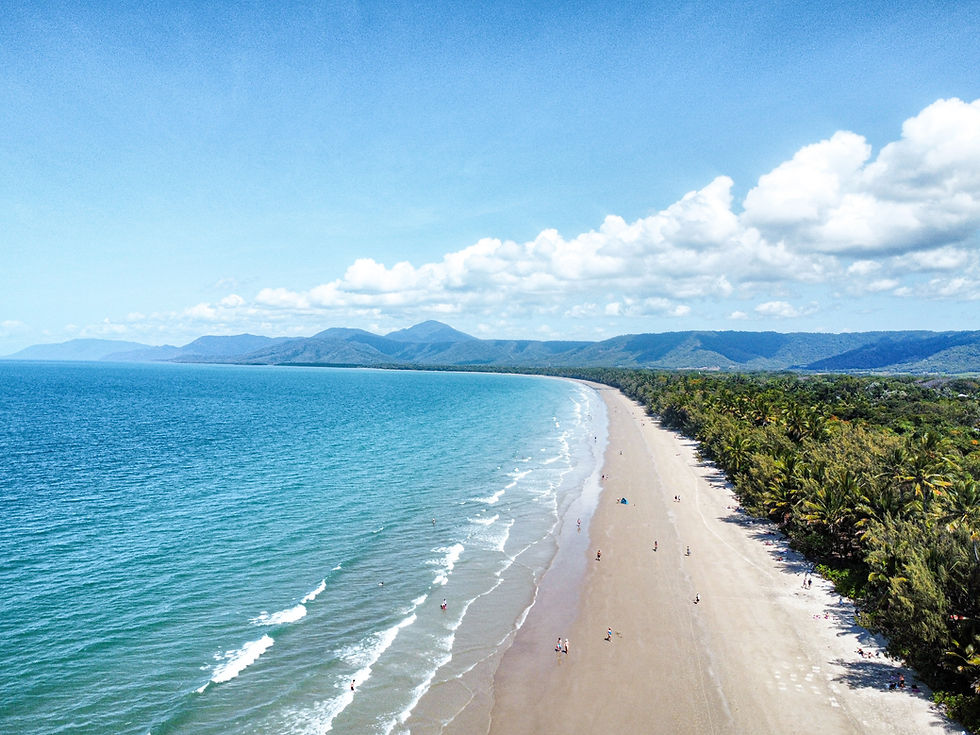
Whitehaven Beach in Queensland's Whitsundays is famous for brilliant white silica sand and turquoise water, while Lucky Bay near Esperance in Western Australia is known for white sand, spectacular water and the kangaroos sometimes seen around the beach.
Wineglass Bay in Tasmania combines beach and wilderness, and Hyams Beach sits within the beautiful Jervis Bay region of the NSW South Coast.
Then there are the beaches that are as much about Australian culture as scenery.
Bondi represents Sydney's beach lifestyle to the world. Bells Beach in Victoria is synonymous with Australian surfing, while Western Australia's Cable Beach is renowned for its Indian Ocean sunsets.
But the best Australian beach isn't necessarily the famous one.
Some of the country's most memorable stretches of coastline are found in small towns and national parks far from the major tourist centres.
A Word About Beach Safety
Australian beaches deserve respect.
Rip currents are one of the most significant hazards on Australian beaches and are responsible for drownings every year. I have experienced one myself, not in a surf beach but a breakwall. I can't stress how important it is when swimming at beaches to do so within the flags. Visitors should choose patrolled beaches wherever possible and swim between the red-and-yellow flags.
A beach can look calm while still having dangerous currents. If you're unfamiliar with Australian surf conditions, local lifesavers and lifeguards are your best source of advice.

Best Summer Destinations in Australia
Where should you actually go during an Australian summer?
It depends enormously on the holiday you want.
Sydney combines beaches, harbour experiences, coastal walks, restaurants and major summer events.
Tasmania is an excellent option for travellers interested in wilderness, walking, food, wine and generally cooler temperatures.
Perth and the Western Australian coast offer hot, dry summer weather, magnificent beaches and spectacular sunsets over the Indian Ocean.
The NSW coast provides an almost endless succession of beach towns, national parks and coastal drives.
Victoria combines Melbourne's food, culture and events with coastal escapes including the Mornington Peninsula and Great Ocean Road.
South Australia offers Adelaide, wine regions, beaches and Kangaroo Island, although summer temperatures can become very hot.
Queensland remains tempting for its islands, beaches and Great Barrier Reef, but visitors need to understand that northern Queensland is in its tropical wet season during summer.
The Northern Territory offers remarkable landscapes and cultural experiences, but summer coincides with the tropical wet season in the north and intense heat through the Red Centre.
There really isn't one “best” Australian summer destination. The better question is what kind of summer you want.

The Tropical North: Summer Means Wet Season
One of the most common mistakes international visitors can make is assuming that Australian summer is automatically the ideal time to visit every part of the country.
Across tropical northern Australia, summer falls within the wet season.
Darwin, for example, receives an average of around 466mm of rain in January. Cairns averages around 379mm in January and even more in February.
The wet season can bring spectacular thunderstorms, lush landscapes and dramatic waterfalls, but it can also bring high humidity, flooding, tropical cyclones and road or attraction closures.
This doesn't mean northern Australia should automatically be avoided in summer. It simply requires different planning from a summer holiday in Sydney, Melbourne or Tasmania.

Australia's Best National Parks to Visit in Summer
Australia's national parks are among its greatest attractions, but summer isn't equally suitable for every park.
Tasmania is particularly appealing at this time of year. Cradle Mountain-Lake St Clair National Park offers everything from short walks to serious wilderness experiences, while Freycinet National Park combines mountains, beaches and the famous Wineglass Bay.
Along Australia's southern coastline, national parks provide opportunities for bushwalking, swimming, wildlife spotting and camping.
Summer visits to inland national parks require considerably more caution because of heat and bushfire conditions. Walking early in the day, carrying sufficient water and checking park alerts before leaving are sensible precautions.
Some Australian parks charge entry fees or require passes, and certain popular walks, campsites and experiences may require advance bookings.
Always check the relevant state or national parks authority before setting out
Snakes in the Australian Bush: What Visitors Should Know

Australia's snakes have a fearsome international reputation, and the country is home to numerous venomous species.However, seeing a snake does not mean you're about to be attacked. Snakes generally prefer to avoid people. If you encounter one, give it plenty of space and don't attempt to touch, catch or kill it.
When bushwalking, wear enclosed shoes, watch where you're stepping and avoid putting hands into places you can't see.
Any suspected snake bite in Australia should be treated as a medical emergency. Call Triple Zero (000), keep the person still and use pressure immobilisation first aid where appropriate. Do not wash the bite, cut it or attempt to suck out venom.
Despite Australia's reputation, deaths from snake bites are uncommon.
Insects, Spiders and Other Summer Creatures
Mosquitoes are likely to be a far more routine summer annoyance for travellers than Australia's more notorious wildlife.
Australia has more than 350 species of mosquitoes, although only some bite humans and most do not carry diseases harmful to people. Mosquito activity can be particularly noticeable around wetlands and following rain. Covering exposed skin and using insect repellent can reduce bites.
I find sandflies insufferable! Once when I took a kayak out for an early morning adventure in Hawks Nest, and I got hammered by them. I counted 150 sandfly bites on my legs and I suffered a lot. I don't know if many doctors would approve of this; my repellent is baby oil and Detol mixed together. It really works in preventing sandfly bites.
Bees, wasps and ants can also sting, and some people can experience severe allergic reactions.
Australia is also home to venomous spiders, but travellers shouldn't spend their holiday anxiously inspecting every corner of their accommodation. Normal precautions such as checking shoes left outside and avoiding handling unfamiliar spiders are generally sufficient.
In tropical areas, marine hazards may deserve more attention than insects. Certain jellyfish and other venomous sea creatures occur in northern Australian waters, so follow local warning signs and advice before swimming.
Sun Safety and Australia's UV
The Australian sun deserves its own section because temperature alone doesn't indicate how quickly skin can burn. A cool or cloudy Australian day can still have high UV levels.
For extended periods outside, use broad-spectrum sunscreen, wear protective clothing, sunglasses and a proper hat, seek shade where possible and remember to reapply sunscreen.
Beach days are particularly deceptive because swimming and sea breezes can make conditions feel cooler than they actually are.
Checking the day's UV forecast before heading outside is a useful Australian habit for visitors to adopt.
What to Pack for Summer in Australia
What you pack depends on where you're travelling.
For most Australian summer holidays, useful basics include lightweight breathable clothing, comfortable walking shoes, sandals or thongs, swimmers, a wide-brimmed hat, sunglasses, sunscreen, insect repellent and a refillable water bottle.
A light jacket or extra layer is still worth carrying, particularly if you're visiting Tasmania, alpine regions or spending time in aggressively air-conditioned buildings.
Bushwalkers should have appropriate footwear and carry considerably more water than they would for ordinary sightseeing.
If you're travelling between different parts of Australia, pack for each destination rather than for “Australian summer” generally.
You could easily experience tropical humidity, dry 40°C heat and a chilly Tasmanian evening during the same Australian trip.
Is Australia Expensive in Summer?
Australia can be an expensive destination, and summer is peak travel season in many parts of the country. December and January coincide with Australian school holidays, Christmas and New Year. Demand for flights, accommodation and popular coastal destinations rises accordingly.
Travellers visiting over Christmas, New Year's Eve or January should consider booking well ahead.
February can offer a useful alternative. Australian children generally return to school around late January or early February, depending on the state, which can reduce some of the peak domestic holiday pressure.
Costs also vary enormously by destination. A luxury harbour hotel in Sydney, island resort in Queensland and campsite in a national park obviously represent very different budgets.
Travellers can reduce everyday costs by using public transport in major cities, choosing self-contained accommodation occasionally and mixing restaurant meals with picnics, markets and casual dining.
Summer Festivals and Events Around Australia
Summer is one of Australia's busiest event seasons.
Sydney begins the year with Sydney Festival, alongside major New Year's celebrations and the Sydney to Hobart Yacht Race, which departs Sydney Harbour on Boxing Day.
Melbourne becomes the centre of international tennis during the Australian Open in January.
Perth's summer arts calendar comes alive with festivals and outdoor performances, while Adelaide's famous festival season begins towards the end of summer.
Regional Australia also hosts food, music, sporting and community events throughout the season.
Festival dates and programs change each year, so this is one part of any summer travel itinerary worth checking directly before booking a trip.
Bushfires, Heatwaves and Summer Weather
Bushfires are part of the Australian summer environment, particularly during periods of hot, dry and windy weather. This writer has experienced many a scary bushfire in her life! The worst was in 2019 NSW just a few weeks after my beloved dad died. I lived in Tuncurry at the time and the fires were in my street. I was able to capture a video of a water bomber over our street that went viral.
For most visitors, this simply means staying informed. Check official weather forecasts and fire warnings when travelling through regional areas or national parks. Follow road closures and emergency instructions and never enter a closed park or fire-affected area.
Heatwaves can pose a more common problem for travellers who try to maintain an ambitious sightseeing schedule regardless of the temperature.
On extremely hot days, change your plans. Visit galleries, museums and indoor attractions, move walks to early morning, take a long lunch somewhere cool and return outdoors later in the day.
Australian summer is much more enjoyable when you work with the weather rather than against it.
Driving in Australia During Summer
Road trips are one of the best ways to explore Australia, but distances can surprise overseas visitors.
A journey that looks manageable on a map can involve hours of driving through sparsely populated country. Consider hiring a campervan to make the trip more economical.
Carry water, keep an eye on fuel levels in regional areas and avoid driving while tired.
Wildlife is another consideration, particularly around dawn and dusk when kangaroos and other animals may be active near roads. Before long regional journeys, check weather, fire and road conditions.
Christmas in Australia
Christmas falls right in the middle of the Australian summer holiday season, which gives it a character very different from its northern hemisphere counterpart.
Christmas lunch might still involve traditional roast dinners, but seafood, salads, cold drinks, backyard entertaining and trips to the beach are equally Australian.
Boxing Day brings the start of the Sydney to Hobart Yacht Race and, for many families, the period between Christmas and New Year means holidays, camping, road trips and time beside the coast.
For visitors, it's worth remembering that some businesses close or operate reduced hours over Christmas and public holidays.

Is Summer a Good Time to Visit Australia?
Absolutely! Provided you choose your destination with the season in mind. For beaches, coastal road trips, outdoor dining, festivals and long evenings, summer in southern Australia can be magnificent.
Tasmania offers an appealing alternative for travellers seeking cooler conditions, while Australia's tropical north provides a completely different wet-season experience.
The Red Centre and inland Australia can be spectacular, but extreme summer temperatures require more careful planning and may make other seasons preferable.
That's really the secret to planning summer in Australia.
Planning an Australian Holiday?
If Australia is calling, take a look at the latest Australian holiday packages and travel deals before you book. You may find packages combining flights, accommodation and extras offer better value than arranging everything separately.
Australia is a continent rather than a single climate. Summer might mean 22°C in Hobart, tropical rain in Darwin, dry heat in Perth, a humid afternoon in Sydney or temperatures approaching 40°C in the centre.
Rather than asking whether summer is the right time to visit Australia, decide which Australia you want to experience.
Then follow the weather.

